Hey, $mart parents 💡
Bring money lessons home with Greenlight’s $mart Parent newsletter, a quick read with impactful tips — delivered free to your inbox weekly.
Key takeaways
Prepping your kids with field trip safety tips is one of the best ways to foster independence and feel more confident letting them out of your sight. Field trips are fun and meant to enhance educational content and learning, but they also open students up to new locations, people, and situations they would not otherwise encounter. This makes trip preparations essential for young explorers.
4 field trip safety tips for parents
Practice the following field trip safety steps with your adventure-bound kids to make the most out of their educational outing.
1. Pack the safety essentials
Dressing and packing for a safe field trip is a great place to start. Getting separated from the group is a big concern, and you can address it by having your kids dress in bright colors and carry a physical ID with contact information.
Here are some basic safety essentials to keep in mind before a field trip:
Dress with safety in mind. Kids should wear clothes that are easy to spot, such as a school mascot sweatshirt. Use neon accessories to stand out in the crowd. Layer for cold, outdoor temperatures or dress light to avoid overheating during trip activities.
Keep contact phone numbers close. Write contact information on a wearable label that will stay secured, or secure a school ID in a pocket.
Stock up on supplies. Will they need water, food, bandages, or bug spray where they're going? Stay hydrated and have enough to eat.
Secure their belongings. Borrow a sturdy luggage tag from a suitcase to attach to their belongings for the day. Remind them not to set down valuables and walk away.
Use a safety tracking device. Pack a safety device like a GPS tracker to ensure your child can be easily located in case of an emergency.
2. Teach kids situational awareness and the buddy system
Field trips are good places to practice situational awareness and the buddy system under some supervision. Situational awareness means paying attention to potential risks, like moving cars, independently. The buddy system pairs two kids together to keep an eye on each other throughout the day. Both practices help kids learn to be responsible for themselves and others in the safe, supportive environment of the field trip.
Teach your field-trip-bound kids responsibility for themselves and others when you advise them to:
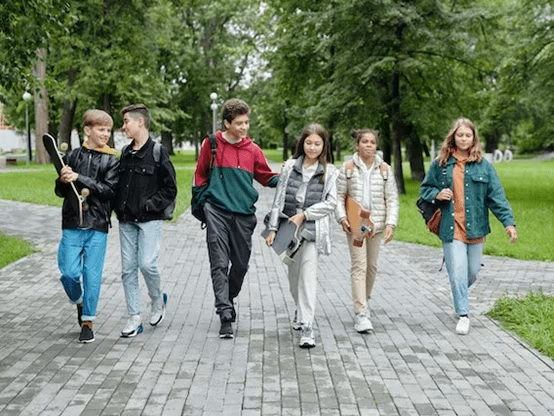
Stay aware of the situation. When kids are in a new place, situational awareness can prevent them from getting injured or separated from the group. For example, situational awareness may come in handy on a field trip when carefully navigating hiking paths while visiting a nature center or keeping up with the group to prevent getting lost in the woods.
Be aware of outdoor risks. Of course, outdoor activities for kids are full of fun, but they can also come with a level of risk. Stay smart around the water on beach field trips and know when to apply sunscreen to prevent sunburns on outdoor field trips.
Stick with a buddy. Choose a friend to stay with throughout the day and keep an eye on each other. This way, no one falls behind the group.
Find a safe adult if you get lost. If separated from the group, look for the staff of the museum, park, or event space. Uniformed police officers or paramedics can also help you find your way safely back.
Emphasize the importance of paying attention to what's going on rather than getting distracted by friends. This can keep kids physically safe and moving along safely with their group.
3. Build a fool-proof communication and check-in plan
Establish a check-in plan for peace of mind while your kid is on a field trip.
Try a "one-way" check-in plan: If phones are allowed, agree on just two specific touchpoints: one when they reach their destination and one when the bus departs for home.
Use screen-free solutions: Since many schools prohibit smartphones on trips, a dedicated device like a GPS tracker is a perfect middle ground. It stays tucked away in a backpack, providing real-time location data and an SOS button for emergencies, without the distractions of a screen.
Lots of schools aren't okay with cell phone use during school hours, even on field trips. This is when a screen-free safety device like Greenlight's Safe Kids GPS tracker can help. It allows you to check in on your kid's location remotely. If they run into trouble, they can send you an SOS with a simple click. Field trips are just one of many GPS safety tracker uses.
4. Perform a post-trip check-in
Any successful plan includes going over what went well. Use fun questions to see how your child practiced field trip safety tips and how you can improve your preparation for the next trip.
Did you have everything you needed, like enough water, snacks, sunscreen, and bandages?
Were your clothes comfortable? Do you think your teacher and buddies could see you easily?
Who was your buddy? What did you do together?
How did your group plan to stay together? Were you in teams with a chaperone, or did you have planned meet-up spots?
Was it easy to find people who worked at the museum/park/event? Did you have to stop anyone to ask questions?
Did you have good cell service in most places to text me?
Did you feel confused, lost, or scared at all?
A casual debrief can help reinforce safety wins before your kid goes on their next big field trip. And it can give you a jumping-off point to address any serious concerns with both your child and their school if a safety issue comes up on the field trip.
Empowering your child for their next big adventure
Take advantage of each opportunity for your child to practice their independence, especially during supervised field trips. Not only is this a safe place to stretch their wings, but it may also be a change in routine that requires real safety skills. Visiting a new place, even with teachers and chaperones, can bring kids into contact with different people and locations they need to be prepared to handle in the future.
Prepare for family safety at home or on a field trip with thoughtful safety rules and digital safety nets like the Greenlight app. With a go-bag of safety items, a buddy to spend the day with, and a phone or device for GPS tracking for school trips, they'll be ready to tackle the adventure.
Protect your family on the go with Greenlight.
The Greenlight Safe Family device, for Kids, Seniors, or Pets, requires the purchase of the device and a monthly data plan for connectivity. Existing Greenlight customers must be on Core, Max, Infinity or Family Shield plans to use the device. Device is not available for use with Select or Greenlight+Invest plans. See Terms for more details.
Share