
Hey, $mart parents 💡
Bring money lessons home with Greenlight’s $mart Parent newsletter, a quick read with impactful tips — delivered free to your inbox weekly.
Key Takeaways
What is an allowance, and why does it matter for kids?
An allowance is a recurring amount of money that parents or caregivers pay their kids, usually weekly. Many families use allowance to introduce money management through real-life experience.
Offering an allowance can be a powerful incentive and lesson. Beyond just using their allowance as fun money, children learn the value of their labor and financial responsibility as they learn to budget, save, give, and invest.
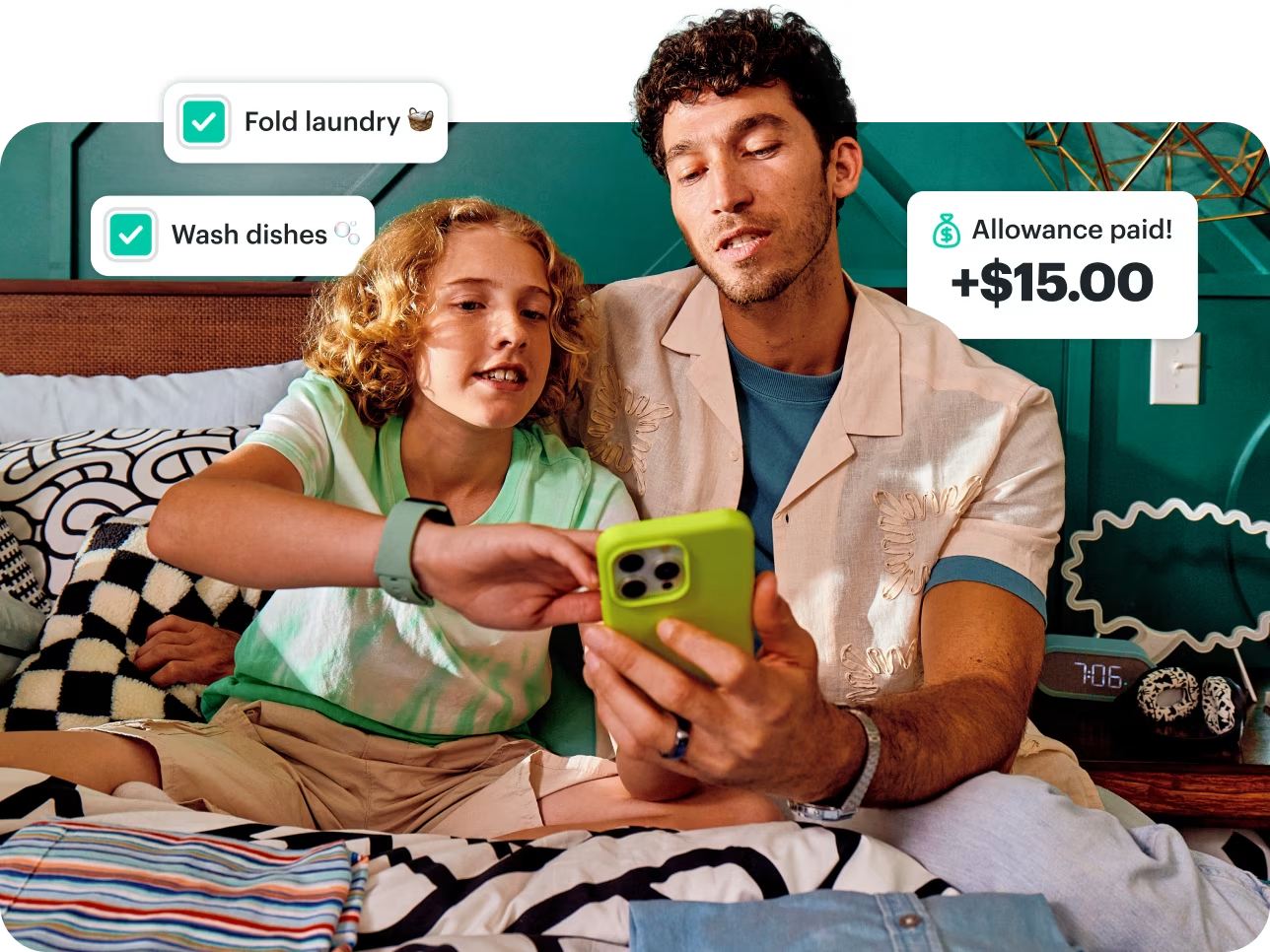
Whether tied to chores, an automated schedule, or one-off payments, tools like the Greenlight debit card and money app make it easy to manage allowances. You can automate savings, direct funds to charity, or put money toward beginner investing, helping kids build smart money habits like budgeting and setting savings goals.
Average allowance for kids and teens in 2025
According to Greenlight's 2025 data, weekly allowance climbs steadily with age. A 5-year-old pocketed just over six dollars a week on average ($6.18), a 13-year-old earned nearly double that at $11.59, and 17-year-olds earned an average of $21.47 in weekly allowance. That's more than three times what the youngest earners got!
Below is the average weekly amount parents paid to their kids, categorized by age.
Weekly Allowance by Age 2025 - Greenlight Kids & Teens
Age | Allowance |
|---|---|
5 years old | $6.18 |
6 years old | $6.44 |
7 years old | $6.79 |
8 years old | $7.22 |
9 years old | $7.86 |
10 years old | $8.53 |
11 years old | $9.35 |
12 years old | $10.37 |
13 years old | $11.59 |
14 years old | $13.13 |
15 years old | $15.26 |
16 years old | $17.89 |
17 years old | $21.47 |
18 years old | $25.01 |
19 years old | $30.12 |
How much allowance should I pay my kids?
There is no "right" amount you should pay your kids for allowance. The average weekly allowance for families who use Greenlight is $13.15. Some parents opt to give their child $1 per year of age. For example, an 11-year-old would get $11 per week, a 16-year-old would get $16 per week, and so on.
So, how do you decide how much allowance to pay your kids? That depends on your family's one-of-a-kind situation and if you're offering allowance for a specific purpose, like household duties or chores, but here are a few things to keep in mind:
Allowances generally rise as kids age.
For children aged 5–8, the average allowance is $6.66 per week.
Kids aged 9–11 get a little more, receiving a weekly average of $8.58.
Kids who are ages 12–19 get a big jump, with a weekly average of $18.11.
How to set up allowances for kids
The best allowance setup is one that's consistent, age-appropriate, and tied to a clear purpose. Here's a simple framework to get started:
Decide on an amount that fits your family's budget. Even a few dollars a week makes an impact.
Choose a payment schedule and stick to it, whether that's weekly, biweekly, or tied to completed chores.
Decide whether to link it to chores or keep allowance separate from household responsibilities.
Give your child a say in how the money is divided between spending, saving, and giving. It's a vital conversation that's worth having early and often.
What to consider when deciding on an allowance amount
National allowance averages are based on a broad range of families, all with unique circumstances. To decide how much allowance to give, keep the following in mind:
Goals
What do you and your child hope to achieve by giving and receiving allowance? Goals can include more spending autonomy, saving up for a specific item, or becoming financially smart. Establishing a goal (or goals) helps shape how your child will earn and manage those dollars.
Chores
To teach financial literacy and instill responsibility, some families tie allowance directly to chores. You could assign individual tasks or create an age-appropriate chore schedule. You can pay per task, set up a weekly checklist, or keep allowance separate from household responsibilities altogether.
Incentives
What motivates your kids? Some parents offer rewards for achieving certain earning or saving milestones, like offering to kick in $5 for every $50 saved. You can also build in small incentives to encourage consistency and keep them excited about progress.
Budget
Your child's allowance should fit within your family's overall budget. It doesn't have to be a big number to be meaningful. A small, consistent amount (even just a few dollars a week) can still teach vital lessons about saving, spending, and patience.
Age
There's no perfect age to begin, but many families start giving a basic allowance at age 5 or 6 if the child is ready. Small children love to clean and help around the house, so strike while the iron is hot! As your kids grow, you can increase their allowance and introduce more decision-making responsibility.
Understanding
If you feel like you should be talking to your child about money more often, you've got company. The Wells Fargo study found that 85% of parents surveyed feel the same way. Your child's level of understanding and ability to follow through can help guide how much freedom you give and support you provide. The discussion around money is as vital as the money itself.
Choosing an allowance management tool for families
You may have saved your allowance in cash-stuffed envelopes or a piggy bank, but today's families have a range of digital tools that make managing allowance simple and educational. According to a Wells Fargo/Ipsos survey, 70% of parents said teaching kids about money means focusing on digital tools.
When choosing a chore and allowance management app, look for:
Automated allowance payments so you never have to remember to have cash
Chore assignment and tracking built directly into the app
Parental controls that keep you in the loop without micromanaging
Kid-friendly visibility so children can watch their money grow in real time
Financial education features that turn everyday transactions into lessons
Some of the most popular options include Greenlight, which combines a debit card and money app for kids and teens with chore tracking and parent-approved investing all in one place. With Greenlight, your child learns financial independence while you decide how, when, and why to pay an allowance, whether that's when chores are completed, on an automated schedule, or as one-off payments.
Which platforms for tracking chores also teach kids about money?
The most effective chore-tracking platforms do double duty by making connections between work and earnings in a concrete way kids can understand. Here's what separates the best from the rest:
Greenlight: Parents assign chores in the app and kids don't get paid until the task is marked complete, making the earn-spend-save cycle tangible and real.
BusyKid: Kids earn a weekly paycheck tied to chores and can split earnings between saving, spending, sharing, and investing.
Acorns Early: Lets kids watch their balance grow as chores are completed, with guided choices about what to do with their earnings.
The best platforms reinforce chore completion into a self-motivated habit. Kids are much more likely to clean their room when they know exactly what it's worth and when they'll get paid.
Greenlight's average allowance for kids and teens in 2024
In 2024, Greenlight found that the average weekly allowance for 5-year-olds was $6.05. Meanwhile, the average weekly allowance for 13-year-olds was $11.57. Older teens were the biggest earners, with $20.87 being the average weekly allowance for 17-year-olds.
Weekly Allowance by Age 2024 - Greenlight Kids & Teens
Age | Allowance |
|---|---|
5 years old | $6.05 |
6 years old | $6.22 |
7 years old | $6.60 |
8 years old | $7.12 |
9 years old | $7.77 |
10 years old | $8.44 |
11 years old | $9.29 |
12 years old | $10.32 |
13 years old | $11.57 |
14 years old | $13.10 |
15 years old | $15.14 |
16 years old | $17.57 |
17 years old | $20.87 |
18 years old | $24.43 |
19 years old | $30.14 |
Empower kids to earn and learn
Connecting chores and allowance is a concrete way to teach kids the value of their labor and how money is usually earned. They learn the thrill of saving and investing and how to budget and allocate money according to wants and needs.
If your family doesn't link chores with allowance, your kids can still learn how to be good managers of their finances. With Greenlight, you don't have to connect allowance to chores. Just pick a day and decide how and when you'd like their allowance to hit, or put it on autopilot for an easy, consistent routine. You can pause at any time.
Ready to teach money skills that stick? Try , the #1 family finance and safety app, and see how easy it is to automate allowance, set chores, and build lifelong smart money habits.
This blog post is provided "as is" and should not be relied upon as a substitute for professional advice. Some content in this post may have been created using artificial intelligence; however, every blog post is reviewed by at least two human editors.
Share